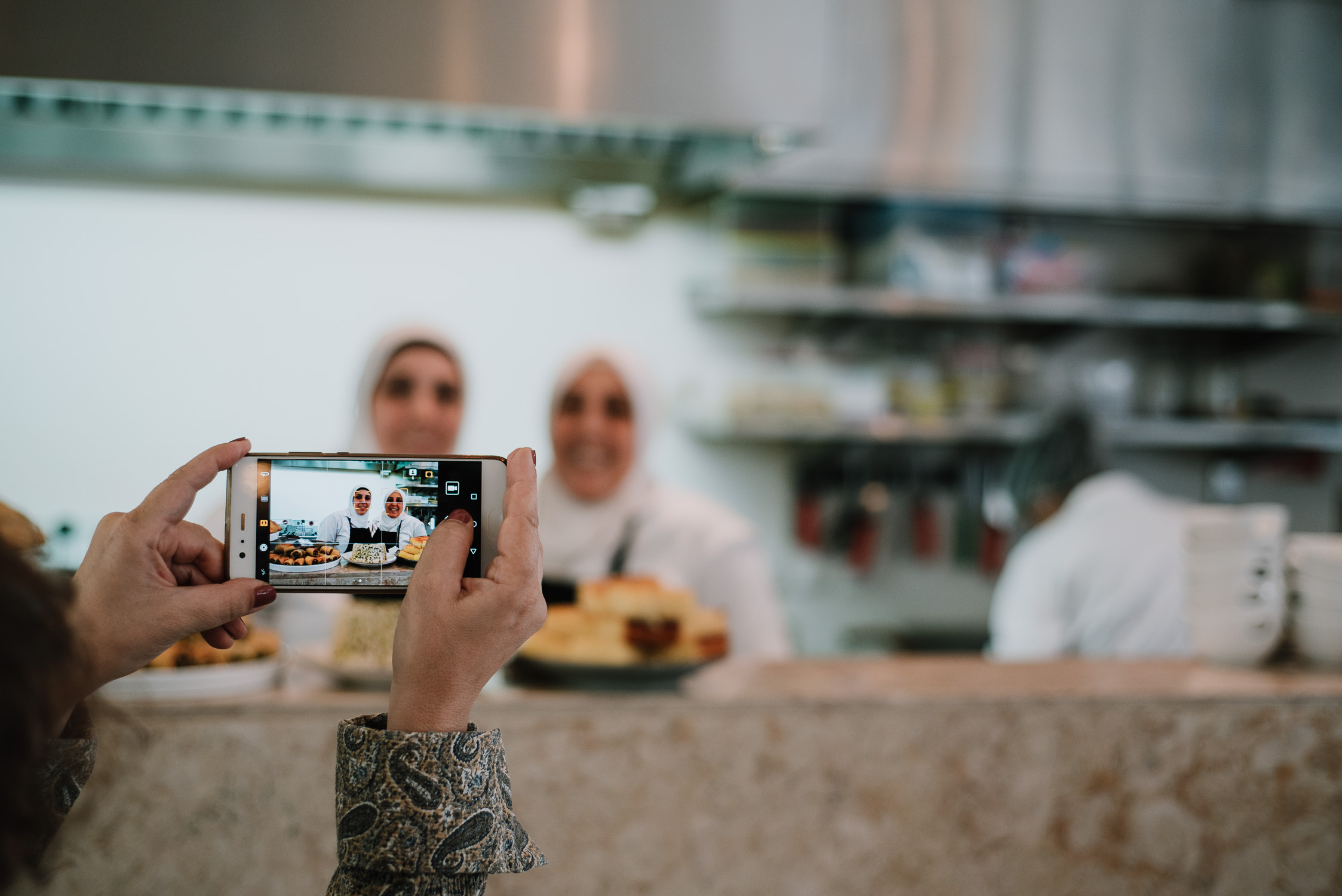
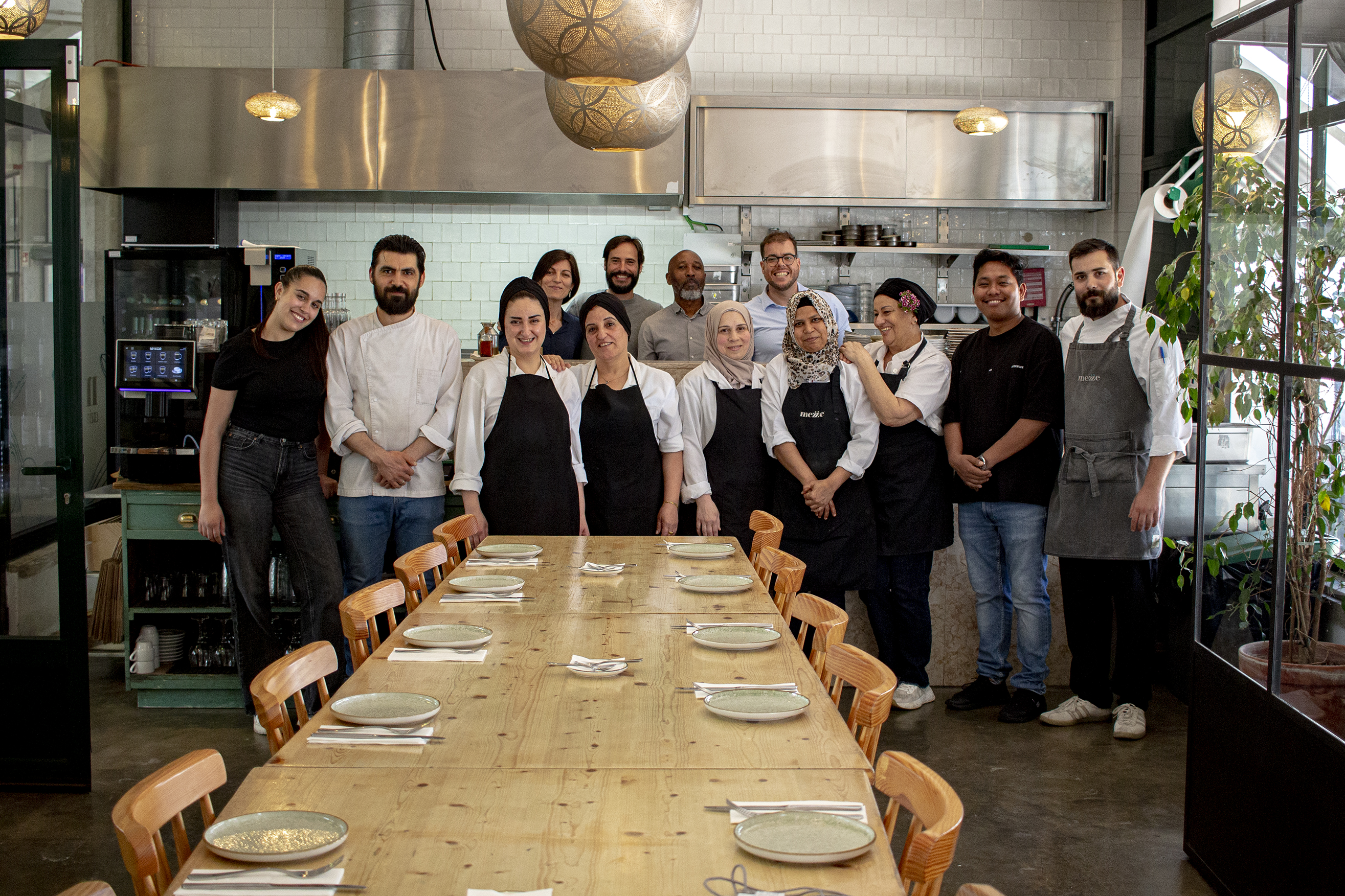
Behind every plate served at Mezze, there is a story of resilience, courage, and a new beginning. Mezze is not just one of Lisbon’s favourite spots for Middle Eastern and world cuisine; it is a live laboratory for social inclusion. Here, the kitchen is a classroom, a workplace, and a sanctuary where refugees regain economic independence and write their next chapters.
We sat down with Nuno Mesquita (NM), Mezze Managing Director, to explore the human stories and the innovative social business model behind Mezze.
3xP: For someone entering a new country, language and customs can be a wall. Why did you choose food and the kitchen as the specific tool to break down that wall for these families?
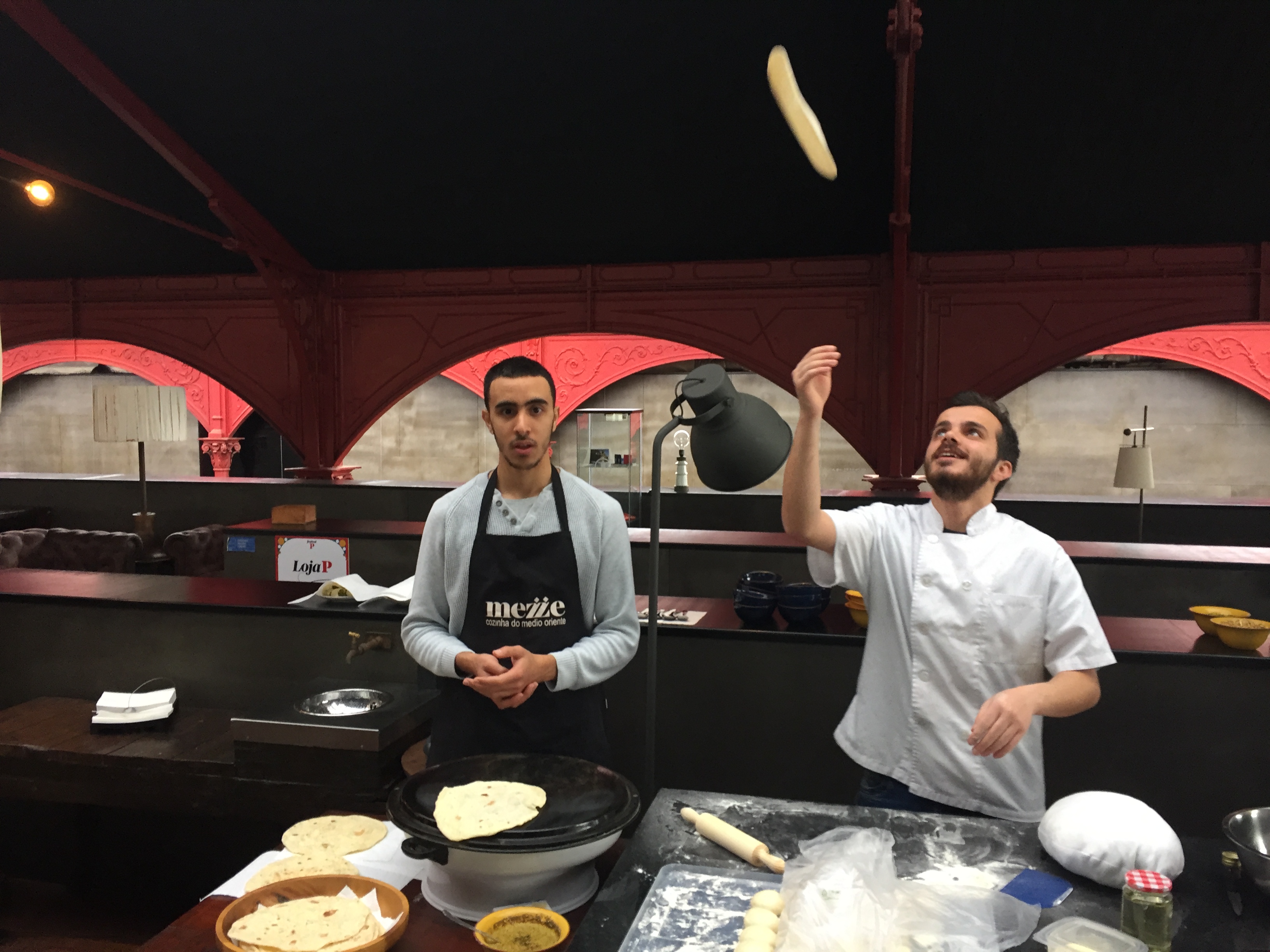
NM: All started back in 2016, when we asked a Syrian girl living in Portugal what she missed the most about Syria. She turned to us and said: “Bread. I miss my bread.” We realised that bread, food and cuisine in general are things that connect everyone, no matter who we are, everyone needs to eat. And for Portuguese people, bread is something very close to our heart. That is why Mezze was born within the association we named Pão a Pão, which means “bread to bread”. That was the reason behind the name.
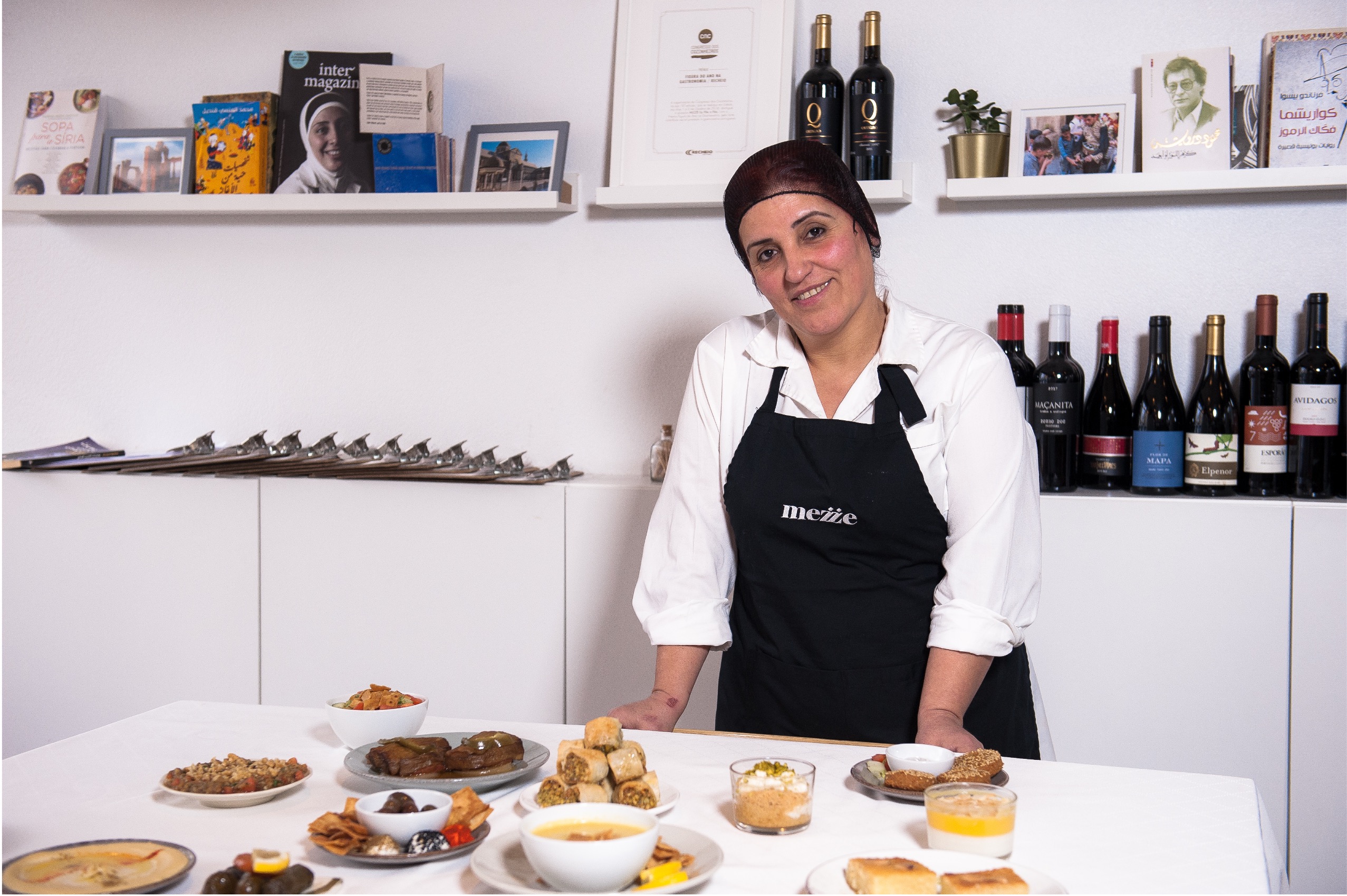
But it was not just about food as a unifying element. It was also about understanding in what way the refugees we were working with at the time could deliver value to our country. We understood that the main risk groups in these migrations — and in most migrations — are women and young adults, and that became our main target group. Most of them had never worked, the young adults because they were still studying or transitioning into professional life, and the women, especially, because many of them stayed at home taking care of the household and the family.
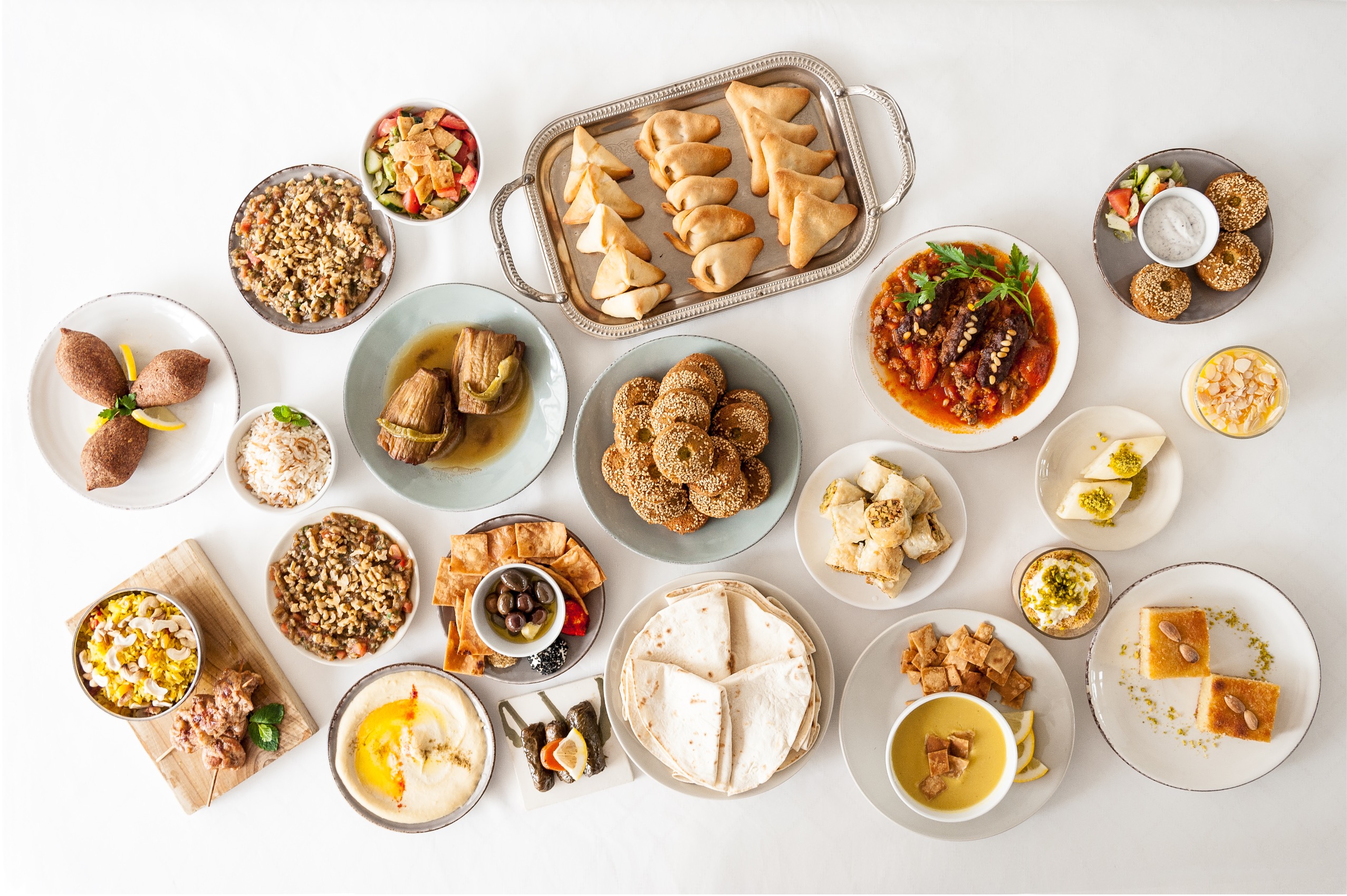
There is also a strong habit of using food to bring people together around the table, family, friends, the wider community. Because of that, we knew not only that women knew how to cook, but that they cooked a type of cuisine that was not very common in Portugal. At the time, there were only two Lebanese restaurants in Lisbon, so visibility for this cuisine was very limited. We sensed there might be a real market for these women to bring their added value.
So food ended up being a natural choice, not only because it is a unifying element, but especially because it was one of the skills the refugees were bringing from their own countries to ours: new flavours, new colours, new dishes. That was our starting point, and that was how we started to bring down barriers.
There is also a funny story worth mentioning. When we opened Mezze, we received a review on a digital platform from someone saying they had gone to Mezze to see refugees, and they saw none. For us, that meant our integration was actually working. The person walked into a functioning restaurant, and that is all they saw. They did not see the hardship, the ugly side that drove these people away from their countries in the first place. Even though that customer was disappointed, for us it was a review of success.
3xP: Many social projects struggle to survive past their initial funding. What was the toughest operational barrier you had to break to prove that Mezze could be a self-sustaining, thriving business without losing its social soul?
NM: For us, the social soul was never really up for negotiation. The fact that we were employing refugees and migrants meant the social mission was ingrained, embodied in the business model itself, and it still is the main driver for what we do.
The operational barriers, however, were real. We were not sure whether Portuguese customers — or customers in Portugal in general — would embrace such a different type of cuisine. So even before testing prices, we ran several trials in Lisbon and the result was extremely positive, which gave us the confidence to charge normal, fair prices for the kind of cuisine we wanted to offer.
The main operational barrier was trust. In the beginning, many of the people we approached to employ were suspicious. They asked us: “Why are you trying to help us? We have been promised a lot of things over the past few years, promises that were never fulfilled. So why you, and why should we trust you?”. Trust building then became part of our daily operations once the restaurant opened.
On top of that, people knew how to cook, but they did not know how to cook in a professional environment. We had to train them for the restaurant industry, with a specific course designed for us by the Hospitality and Tourism School of Lisbon to prepare the team before launch. We also hired consultants and a couple of chefs who were with us daily during the pre-launch and post-launch phase, and then on a weekly basis as things improved. The most important thing, the cuisine itself, they already knew. The recipes were theirs. But they had to learn how to replicate them, day in and day out, for customers walking into a professional restaurant. Those were the main challenges.
3xP: Traditional venture capital looks closely at spreadsheets and numbers. What do you believe 3xP Global saw in Mezze’s human-centric mission that made them say: “This is exactly where we want to invest”?
NM: We are still focused on employing refugees and migrants, and we have been running a well-known restaurant that has been successful for the past nine years.
I believe 3xP first of all trusted the management in charge of Mezze. We have almost ten years behind us, which proved that Mezze is an important and well-known project, capable of generating revenues and cash flow — yes, that part also goes into the spreadsheet— and able to sustain itself even through the harshest periods, such as COVID and the inflation that followed.
There was trust in our ability to do more and more. We opened as a restaurant, then launched catering services, takeaway, workshops, and in the past couple of years we have also launched packaged products. So 3xP also realised that we were not just running the business we created nine years ago, we are constantly trying to improve and innovate, because our goal is to remain relevant in the market in order to employ and integrate more people.
It says a lot about us that we have never stepped away from our mission. 3xP understood that we are not just a restaurant, and that is why we now have a plan to grow over the next five years.
3xP: What is the legacy you hope to leave in the Portuguese hospitality sector over the next five years?
NM: People will come to understand that Mezze was never supposed to be just a restaurant in Lisbon. Over the next five years, we expect to grow at least five fold and to be present across the country: our goal is to go to Porto, and to the Algarve.
I believe it will be an amazing legacy to show that a Portuguese social project that started from scratch has managed to create this hospitality social business, spread it across the country, and turn it into one big group with a huge impact in the community.
These are very challenging times in the way society perceives migrants, and it is important for us to help build trust. When we started working on this project ten years ago, it was about refugees from the Middle East. Today, it is about migrants in general. We carry a huge responsibility to be a force, to speak up, and to show that migrants are not a burden. If they are integrated properly, people are an added value to any society when they are treated, integrated and supported properly.
That is the legacy we want to leave: Mezze as a social business that keeps its mission at its core, succeeding both in integration and as a business. I think we will be able to show that these two worlds are not separate worlds, and serve as an example for any other business.
One more thing: because the origin of migrants keeps changing, and because we want to showcase the culture of the people we are helping to integrate, we also hope that in five years’ time our gastronomy will no longer be focused solely on the Middle East, but will be a window into cuisines from across the world. We will already start moving in that direction this year.
3xP: For anyone out there who wants to build a project that fixes a deep social wound, what is the one truth about working with human lives and vulnerability that you think every founder should know?
NM: First of all, social problems are complex because we are dealing with people, with human lives. And social problems are rarely unidimensional. But when we come up with a solution, we should take a step-by-step approach. We cannot tackle every single issue of the specific group we are trying to help, we have to choose our battles carefully.
The battle we chose was employment. It is a long-term solution, rather than just offering support at the moment of arrival. Employment is also one of the three main factors for integration: employment, language and the psychological dimension. We decided to focus on one area, and over the years we have managed to work on the other two as well. At Mezze, we are supportive not just by providing Portuguese lessons over the years, but also by partnering with organisations that give emotional and psychological support, not only to our employees, but also to their families.
So my advice to any project leader starting from scratch would be this: choose your battles, build trust with the group you are trying to work with, and grow from there step by step. Do not try to tackle every aspect of a human life, because that is too complex and will inevitably require the support and involvement of different organisations.
For more inspiring stories and updates on how 3xP Global is supporting startups like Goparity, Kinetikos Health, La Bolsa Social, PeekMed, Leadzai, Mútua Saúde, SiosLife, Seedsight or LoopOS.
Follow us on LinkedIn and explore our website.